
Third-party logistics (3PL) providers are specialized companies that manage warehousing, shipping, and order fulfillment for small brands, delivering fulfillment cost reductions of 20–30% and the operational flexibility that in-house logistics cannot match. For small eCommerce brands and entrepreneurs, understanding why small brands need 3PL is the difference between a logistics operation that drains cash and one that fuels growth. A 3PL converts fixed overhead into variable costs that scale with your order volume, frees up founder time, and puts enterprise-grade shipping technology within reach of brands that ship a few hundred orders a month.
Why small brands need 3PL to cut fulfillment costs
Fulfillment is one of the fastest ways a small brand bleeds margin. Warehouse leases, packing staff, and carrier contracts all carry fixed costs whether you ship 50 orders or 500. A 3PL eliminates that exposure.
Transitioning to a 3PL can reduce overall fulfillment costs by 20–30% through economies of scale, including bulk carrier discounts and shared warehouse overhead. That is not a rounding error. One documented example shows cost per order dropping from $7.80 to $5.40, a 31% reduction that goes straight to margin.
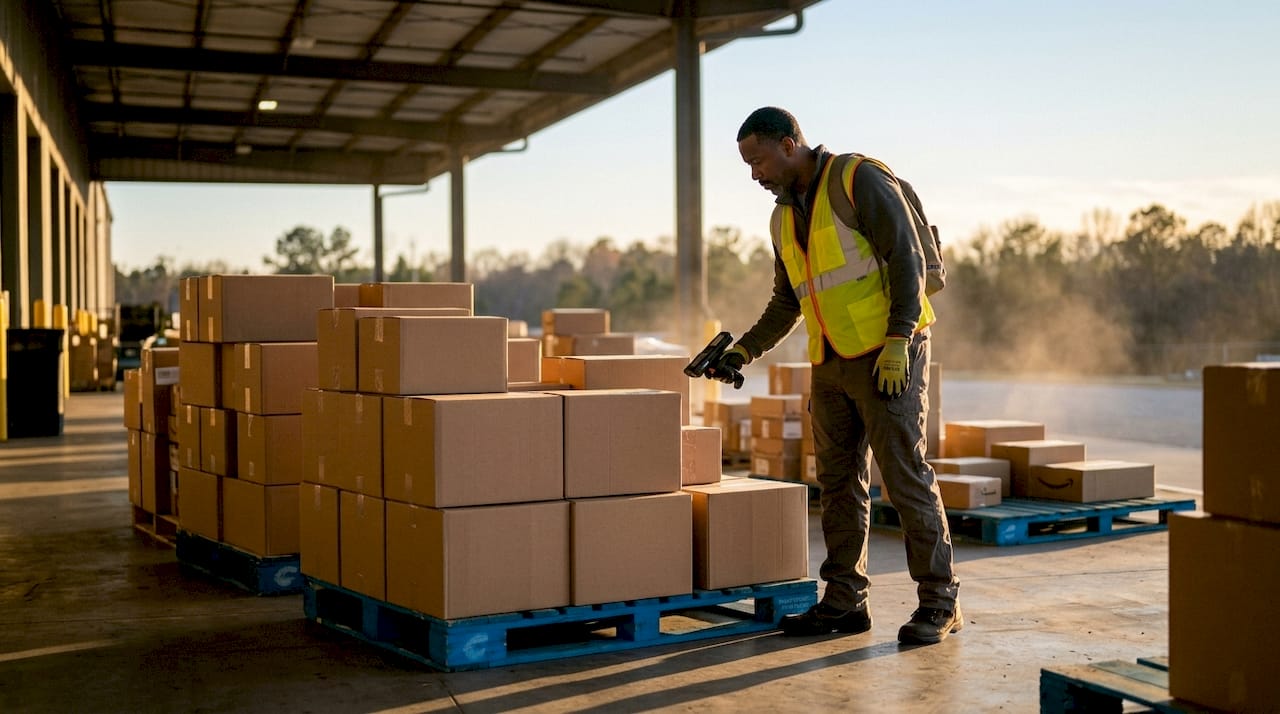
The mechanism is straightforward. A 3PL ships thousands of packages daily across dozens of clients. Carriers give volume discounts based on aggregate shipment counts, not individual brand volume. Your brand rides that discount even if you ship 1,000 orders a month.
3PL providers convert fixed costs such as warehouse leases, labor, and equipment into flexible variable costs that scale with order volume. That shift matters most during slow seasons. You stop paying for empty warehouse space and idle staff when sales dip.
Key cost advantages a 3PL delivers for small brands:
- Volume carrier discounts on UPS, FedEx, and USPS rates negotiated at aggregate volume
- Shared warehouse overhead spread across multiple clients, reducing your per-unit storage cost
- No capital commitments on forklifts, racking systems, or warehouse leases
- Labor flexibility with pick-and-pack staff that scales up during peak season without your HR involvement
- Reduced error costs from professional packing processes that lower damage and return rates
Pro Tip: Read every 3PL contract line by line before signing. Hidden fees on receiving, special handling, and account minimums can erode the savings you expect. Ask for a full fee schedule, not just the per-order rate.
How 3PLs improve delivery speed through distributed fulfillment
Shipping speed is now a baseline customer expectation, not a premium feature. The problem for small brands is that fast shipping from a single location is expensive. Ground shipping from one warehouse in Ohio reaches a customer in California in five to seven days. That forces you into costly expedited air shipping to compete.
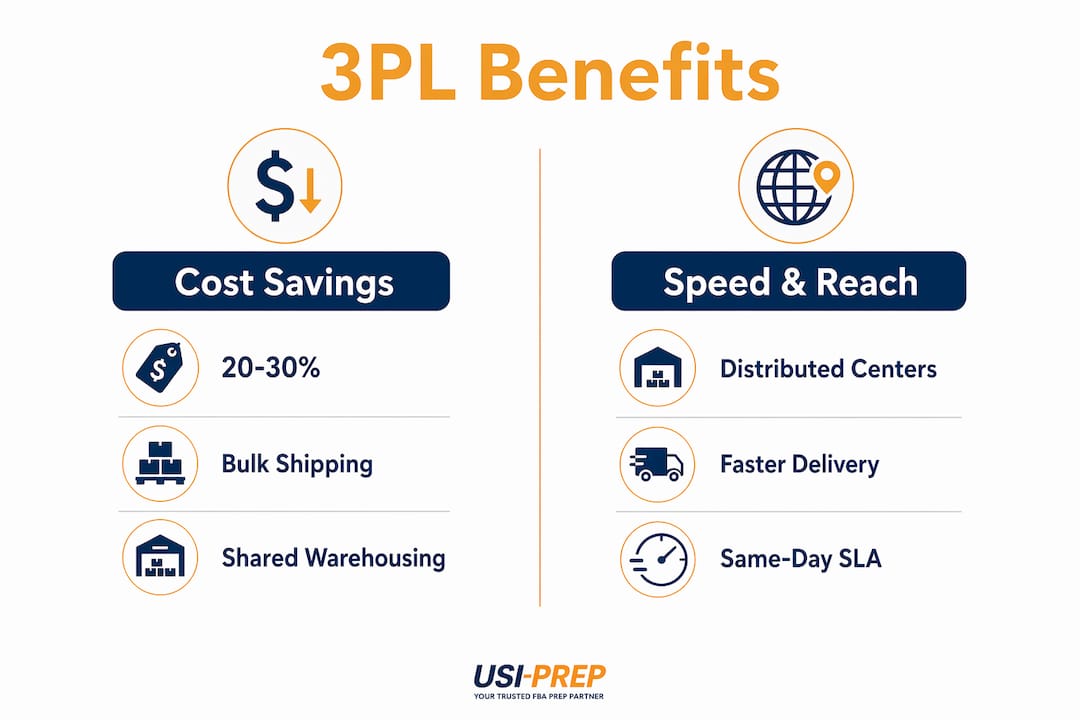
3PLs use multiple regional fulfillment centers to keep inventory closer to customers, reducing shipping zones and enabling cheaper ground shipping while maintaining delivery speed. Geographic distribution is the core advantage. A 3PL with fulfillment centers in New Jersey, Texas, and Nevada can reach most U.S. addresses in two days via ground shipping.
This matters because geographic inventory distribution is the biggest advantage 3PLs offer, and it is one small brands almost never replicate independently. Running three warehouses requires three leases, three teams, and three sets of inventory management systems.
| Fulfillment approach | Average shipping zones crossed | Typical delivery time | Relative shipping cost |
|---|---|---|---|
| Single in-house warehouse | 4–6 zones | 4–7 days ground | High |
| 3PL with 2 regional centers | 2–3 zones | 2–4 days ground | Moderate |
| 3PL with 3+ regional centers | 1–2 zones | 1–2 days ground | Low |
The table above shows a pattern that plays out consistently: more fulfillment nodes mean fewer zones crossed, lower ground rates, and faster delivery without paying for air freight. For small brands competing against larger retailers, this levels the playing field on the metric customers care about most.
3PLs also support same-day and next-day delivery service level agreements (SLAs) for brands selling on platforms that require them. Managing those SLAs independently, across multiple sales channels, is operationally brutal for a small team.
What expertise and technology access does a 3PL provide?
Most small brand founders are product experts, not logistics experts. Carrier contract management is a specialized discipline. Rates change quarterly, accessorial fees shift without notice, and carrier invoices routinely contain billing errors.
Carrier management requires dedicated staff to track carrier performance and audit invoices for errors. Small brands managing their own shipping rarely have that capacity. Overpayment on carrier invoices is common and goes undetected without systematic auditing.
Advanced warehouse management systems (WMS) and transportation management systems (TMS) provided by 3PLs offer inventory tracking, optimized shipping routes, and real-time order visibility. These platforms cost tens of thousands of dollars annually to license and implement independently. A 3PL partnership includes access to that infrastructure as part of the service.
Here is what technology access through a 3PL typically includes:
- Real-time inventory tracking across all fulfillment locations, with low-stock alerts and replenishment triggers
- Automated order routing that selects the optimal fulfillment center for each order based on proximity and stock levels
- Carrier rate shopping that compares rates across UPS, FedEx, USPS, and regional carriers at the moment of shipment
- Invoice auditing tools that flag billing discrepancies and recover overcharges automatically
- Returns management portals that process customer returns, restock sellable inventory, and report disposition data
- ERP and storefront integrations with Shopify, WooCommerce, and Amazon Seller Central for seamless order flow
Effective 3PL partnerships require transparent data sharing and integration with your inventory systems. That integration is what turns a 3PL from a vendor into a real operational asset. Without it, you are flying blind on inventory levels and fulfillment performance.
When should a small brand partner with a 3PL?
The right time to move to a 3PL is before logistics becomes a crisis, not after. Most brands wait too long and make the transition under pressure, which leads to poor provider selection and rocky onboarding.
Small brands typically consider 3PLs when reaching 1,000–2,000 monthly orders or facing operational complexity such as multi-channel fulfillment or geographic expansion. That volume threshold is a useful starting point, but it is not the only signal. If your team spends more than 20% of its time on packing, shipping, and carrier issues, the operational cost is already too high regardless of order count.
Triggers that signal it is time to evaluate a 3PL:
- Storage constraints at your current location are limiting inventory depth and slowing restock cycles
- Multi-channel sales across Amazon, your own website, and TikTok Shop require separate fulfillment workflows your team cannot manage manually
- Geographic expansion into new regions makes single-location shipping uncompetitive on speed and cost
- Founder time drain where logistics tasks crowd out product development, marketing, and customer acquisition
- Seasonal volume spikes that require temporary warehouse space and staff you cannot hire and train fast enough
Outsourcing logistics frees founder time for core activities like product development and marketing. That shift from operational execution to strategic focus is where most small brands find the biggest return on a 3PL partnership.
When evaluating providers, prioritize transparency on pricing, technology integration capability, and fulfillment center locations relative to your customer base. A detailed guide on how to set up outsourced fulfillment can help you structure that evaluation process.
Pro Tip: Ask every 3PL candidate for their on-time delivery rate and error rate before signing. A provider that cannot share those numbers does not track them, and that tells you everything you need to know.
Key Takeaways
Small brands that partner with a 3PL gain cost savings, faster delivery, and technology access that in-house logistics cannot replicate at the same price point.
| Point | Details |
|---|---|
| Cost reduction is immediate | 3PLs cut fulfillment costs 20–30% through volume carrier discounts and shared warehouse overhead. |
| Fixed costs become variable | Warehouse leases and labor convert to per-order fees, protecting cash flow during slow periods. |
| Distributed fulfillment wins on speed | Multiple regional centers reduce shipping zones, enabling two-day ground delivery without air freight costs. |
| Technology access levels the field | WMS and TMS platforms included in 3PL partnerships give small brands enterprise-grade inventory and shipping tools. |
| Timing matters for the transition | Brands hitting 1,000–2,000 monthly orders or facing multi-channel complexity should evaluate 3PL partners proactively. |
The real reason 3PL partnerships change the trajectory of small brands
I have watched small eCommerce brands treat logistics as a back-office problem they will fix later. That is almost always the wrong call. Logistics is customer experience. A late shipment or a wrong item does more damage to a brand than a bad ad campaign.
What I have found is that the brands that grow fastest are the ones that stop trying to own every part of their operation. A 3PL is not a vendor you hand boxes to. The best ones act as an extension of your team, with dedicated account managers who know your SKUs, your seasonal patterns, and your customer expectations. 3PL relationships deepen beyond vendor transactions into collaborative growth partnerships when both sides invest in communication and data sharing.
The other thing most articles miss: 3PLs are a supply chain resilience tool, not just a cost tool. 3PL providers act as a buffer against supply chain disruptions by maintaining multi-carrier relationships and distributed fulfillment networks. When one carrier has a service failure or one region has a weather event, a good 3PL reroutes without you having to manage it.
My honest advice is to stop measuring a 3PL partnership purely on cost per order. Measure it on founder hours recovered, on-time delivery rate, and customer satisfaction scores. Those numbers tell you whether the partnership is actually working. Usiprep reports a 98.9% on-time delivery rate and a 30% reduction in fulfillment costs for clients. Those are the metrics worth benchmarking against.
— Akbar
How Usiprep helps small brands fulfill orders with confidence
Small brands that are ready to stop managing logistics themselves and start growing their business have a clear next step.
Usiprep was founded by former Amazon sellers who experienced firsthand what unreliable fulfillment does to a brand. That background shapes everything about how Usiprep operates: transparent pricing, faster inventory check-ins, and complete visibility at every stage of the fulfillment process. Clients consistently report a 30% reduction in fulfillment costs and a 98.9% on-time delivery rate. Whether you need FBA prep services or full outsourced order fulfillment, Usiprep builds the solution around your brand’s specific needs. Visit usiprep.com to get started.
FAQ
What is a 3PL and what does it do for small brands?
A third-party logistics (3PL) provider manages warehousing, order picking and packing, shipping, and returns on behalf of a brand. Small brands use 3PLs to reduce fulfillment costs, improve delivery speed, and free up team time for growth activities.
How much can a small brand save by switching to a 3PL?
Switching to a 3PL typically reduces fulfillment costs by 20–30% through volume carrier discounts and shared warehouse overhead. One documented example shows cost per order dropping from $7.80 to $5.40, a 31% reduction.
When is the right time for a small brand to use a 3PL?
Most small brands benefit from a 3PL when they reach 1,000–2,000 monthly orders or face multi-channel fulfillment complexity. Earlier adoption makes sense if logistics is consuming significant founder time or storage constraints are limiting growth.
Can a 3PL help with Amazon FBA fulfillment?
Yes. Many 3PLs specialize in FBA prep, handling labeling, bundling, and shipment creation to meet Amazon’s requirements. Working with a 3PL that understands FBA prep requirements reduces the risk of Amazon receiving delays and compliance penalties.
What should I look for when choosing a 3PL?
Prioritize on-time delivery rate, transparent pricing with a full fee schedule, fulfillment center locations relative to your customers, and technology integration with your storefront. A provider that cannot share performance data is not a partner worth trusting.