
Wrap every fragile item individually and pack it with at least 2 inches of cushioning on all sides. If it weighs more than 10 pounds or carries real value, use the double-box method. This mirrors what FedEx and U-Haul recommend, and it’s the same standard fulfillment operators apply when prepping inventory at scale. Start by gathering the right materials below.
TL;DR:
- Double-boxing is recommended for items over 10 pounds or high-value shipments to reduce damage during transit.
- Proper cushioning with at least 2 inches of padding, along with fitting the box size to the item, minimizes impact and shifting risks.
- Protective layering should start with wrapping in paper, then foam or bubble wrap, especially focusing on corners and protruding parts.
- Using molded pulp or custom inserts improves protection for repeat shipments, but testing fit before full-scale packing is essential.
- Consistent packing techniques are critical at volume, and outsourcing to specialists can significantly lower damage rates and improve reliability.
Table of Contents
- The Materials That Make Fragile Item Packaging Work
- How Do You Choose the Right Box Size?
- What’s the Right Way to Wrap and Cushion Fragile Items?
- How Much Void Fill Do You Actually Need?
- How Do You Pack Specific Fragile Items Like Glassware or Electronics?
- Sealing, Labeling, and Testing Before It Ships
- Loading and Transport: Where Fragile Boxes Actually Get Damaged
- Eco-Friendly Options That Still Protect Fragile Items
- Why Packing Consistency Matters More at Scale
- When It’s Time to Let a Prep Partner Handle It
- Sources
The Materials That Make Fragile Item Packaging Work
Good protective packaging solutions come down to a short list of supplies, used correctly. Skimping on any one of them is usually where the damage claim starts.
- Corrugated boxes, single-wall for lighter items, double-wall for anything heavy or high-value since it resists crushing and stacking loads far better.
- Bubble wrap or foam wrap, for individual wrapping of glass, ceramic, and anything with a hard edge.
- Packing paper or kraft paper, cheap, recyclable, and good for the first wrapping layer or for filling small gaps.
- Foam inserts or molded pulp cradles, for repeat shipping of the same product shape.
- Air pillows, lightweight void fill for larger empty spaces.
- H-tape and a tape gun, for sealing seams so they don’t split under pressure.
FedEx’s own packing guidance calls for individually wrapping breakables and, in some cases, roughly 3 inches of air-cellular cushioning around the item before the box closes. If you’re shipping the same SKU repeatedly, a molded insert costs more upfront but pays for itself in fewer replacements. For occasional moves or one-off shipments, paper and bubble wrap from a hardware store do the job fine.
How Do You Choose the Right Box Size?
The box should provide a couple of inches clearance between the wrapped item and every wall, top, and bottom. Less than that, and there’s no room to absorb shock. More than that, and the item shifts around inside during transit, which is arguably worse.
Weight is the deciding factor for whether one box is enough. Lighter items can often be grouped with proper separation. Heavier fragile items should get their own box. Very heavy or especially fragile items call for the double-box method: an inner box holding the wrapped item, then a protective gap between that inner box and a larger outer box. That gap is what gives the package deceleration space during a drop, rather than transferring the impact straight through to the item.
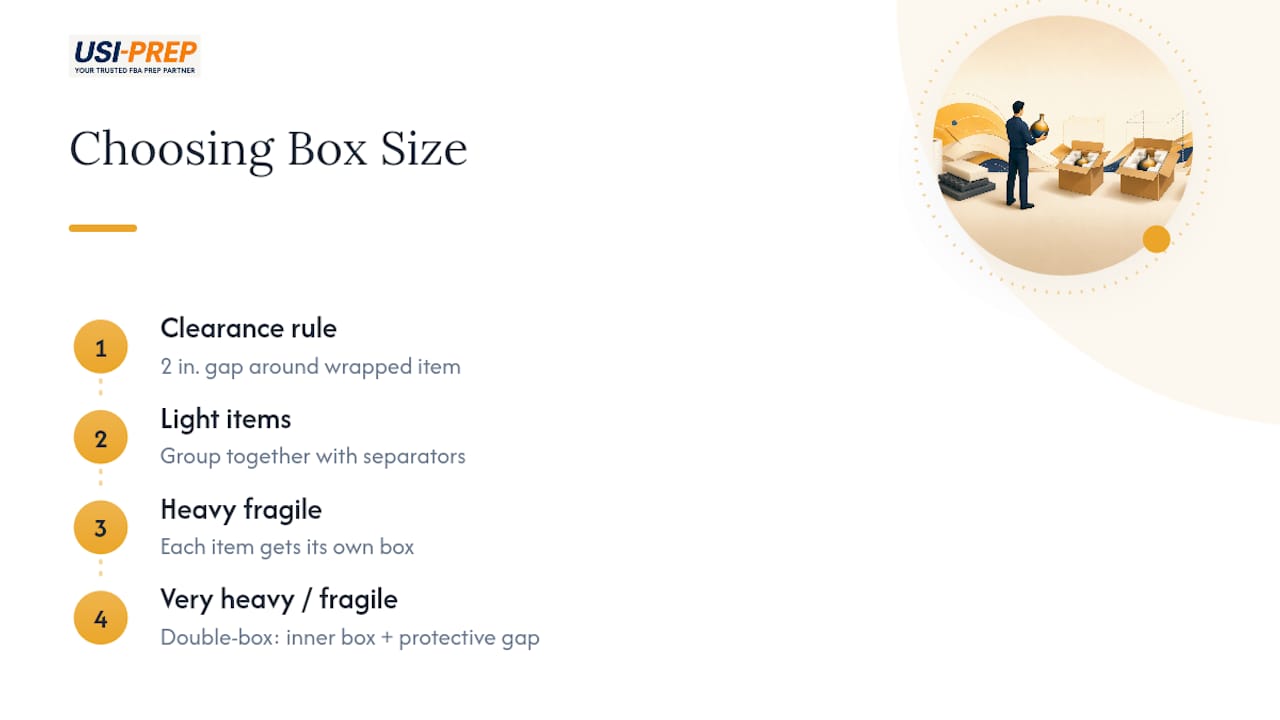
Avoid the instinct to grab the biggest box available “just in case.” Oversized boxes increase dimensional weight shipping costs and give fragile contents more room to slide. Custom foam inserts solve this when you’re shipping an irregular shape repeatedly.
What’s the Right Way to Wrap and Cushion Fragile Items?
Layering order matters more than most people assume. Start with a layer of packing paper against the item’s surface to prevent scratching, then add foam or bubble wrap over that, and finish with tape that holds the wrap in place without touching the item directly.
- Wrap each piece on its own, never as a stack, even if they’re going in the same box.
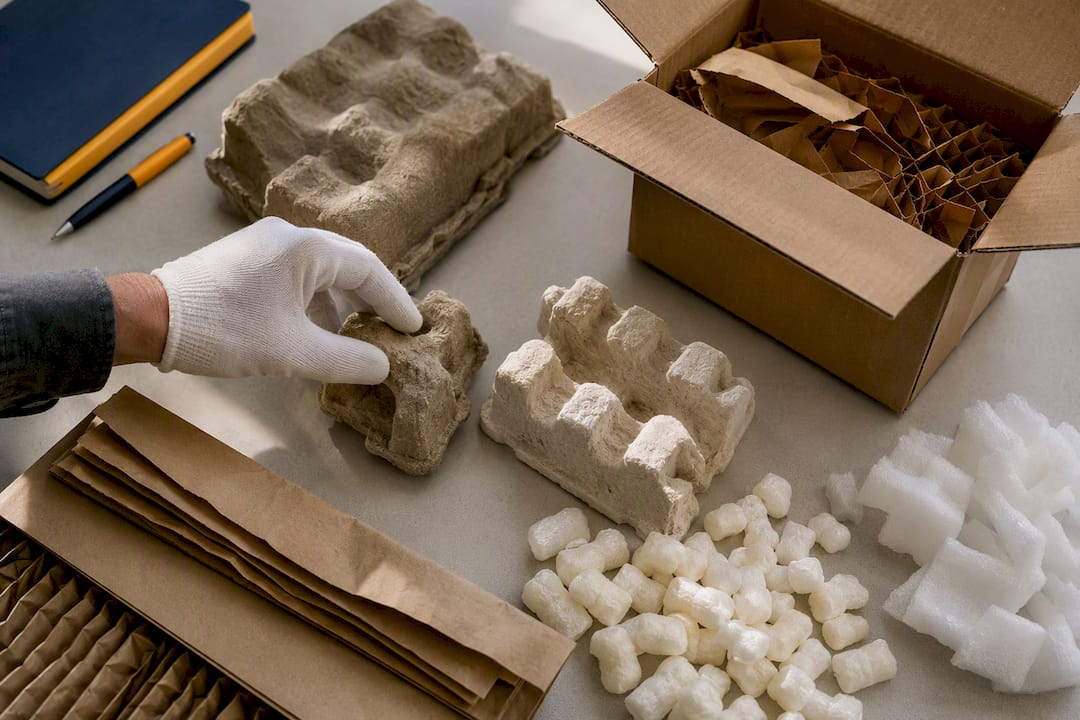
- Use molded pulp or foam cradles for items with an odd shape, a base that’s wider than the top, or protruding parts like handles.
- Focus extra cushioning on corners, rims, and any point that sticks out. That’s where the impact energy concentrates in a drop.
A fitted insert paired with targeted cushioning at the likely impact points reduces damage more reliably than dumping loose fill everywhere and hoping, according to packaging guidance from EcoEnclose. Designing that insert starts with mapping the product’s actual weak points, then building a snug hold around the base or shoulders so the item can’t rock, according to PackagingVista’s guide to protective design.
Pro Tip: Test the insert and outer box together before you commit to a packing process for a whole batch of products. An insert that fits perfectly in isolation can still leave gaps once it’s inside the actual shipping box.
How Much Void Fill Do You Actually Need?
Void fill isn’t about stuffing the box until nothing moves, it’s about placing the right fill in the right spots. Air pillows work well for large open spaces and add almost no weight. Crumpled kraft paper is cheaper and biodegradable but compresses over time. Packing peanuts fill oddly shaped gaps but shift easily. Foam blocks hold their shape best under repeated handling.
- Fill corners and weak points first, since that’s where an item is most likely to shift during a drop.
- Fill remaining side gaps until the item can’t slide when the box is tilted.
- Close the box and run the shake test: pick it up, shake it gently, and listen. Movement or rattling means you need more fill before it ships.
A quick shake test and a compression check before sealing catch a poor pack before it becomes a damage claim, per U-Haul’s packing guide.
How Do You Pack Specific Fragile Items Like Glassware or Electronics?
Different items fail in different ways, so the packing method should match the object, not a one-size-fits-all wrap job.
- Glassware and dishes: pack plates vertically, like records in a crate, never flat and stacked. Stemware needs individual wrapping plus a divider or foam sleeve around the stem, the thinnest and most breakable point.
- Electronics: use the original packaging when it’s available since it’s molded to the device. Add an anti-static layer if the original foam is gone, and keep cords and accessories in separate labeled pouches. Loose cables rattling against a screen during transit is a common cause of preventable damage.
- Mirrors and frames: tape an X across the glass with painter’s tape to hold shards together if it breaks, add corner protectors, and ship in a mirror box built for the flat, wide shape.
- Lamps: disassemble the base, shade, and bulb, and wrap each piece on its own. A lamp shipped assembled almost always arrives with a bent frame or cracked shade.
Sealing, Labeling, and Testing Before It Ships
Seal every seam with the H-taping method, three strips forming an H across the top and bottom flaps, and add extra reinforcement strips on boxes over 20 pounds. Label the box clearly with “Fragile” and “This Side Up” on at least two sides, and mark “Do Not Stack” if the contents can’t handle weight on top.
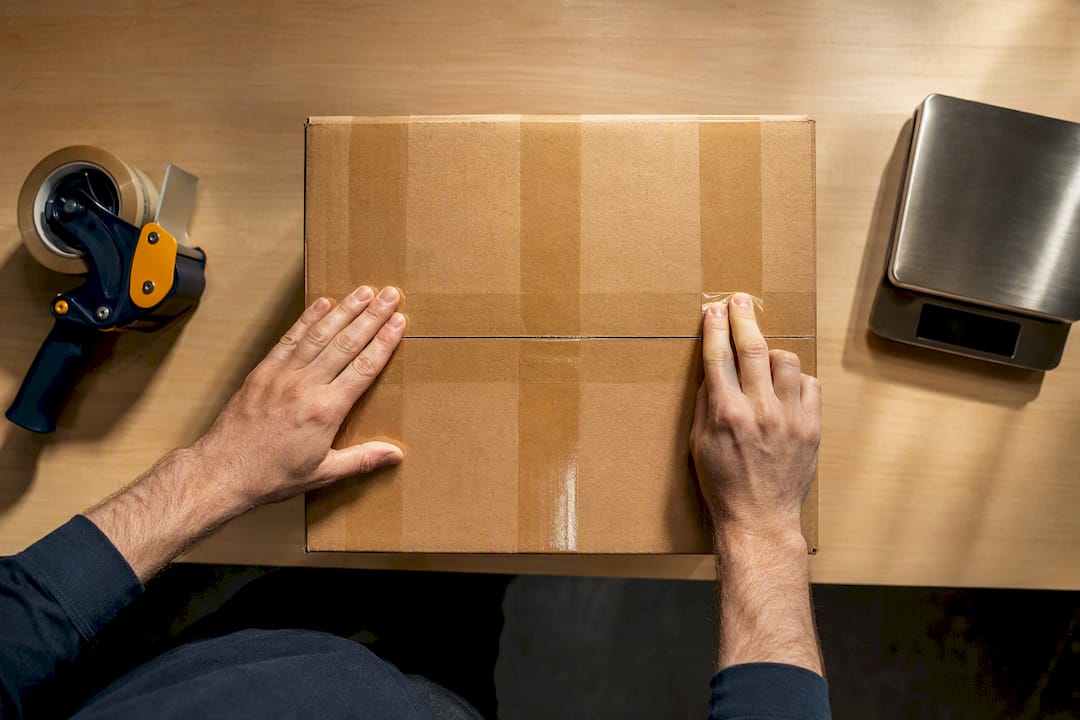
Before it leaves your hands, run the shake test one more time, press gently on each side to check for give (a compression check), and weigh and measure the box against your carrier’s size and weight rules. Skipping this last check is how a well-packed box still ends up damaged.
Loading and Transport: Where Fragile Boxes Actually Get Damaged
A lot of breakage happens after the box is sealed, during loading. Heavy boxes go on the bottom, fragile boxes go on top and toward the center of the load, away from walls that flex during transit. Use straps to keep stacks from shifting, and never let a fragile box bear weight it wasn’t rated for.
For palletized shipments, keep fragile cartons on the top layer and avoid mixing weight classes on the same pallet tier. If you’re shipping something high-value, carrier insurance is worth the extra cost, and noting handling instructions on the shipping label (not just the box) increases the odds a handler actually sees them before tossing it on a truck.
Eco-Friendly Options That Still Protect Fragile Items
Molded pulp, recycled kraft paper, and biodegradable packing peanuts now perform well enough for most household fragile items, according to sustainable packaging industry data. The trade-off is weight and cushioning performance. Foam still wins for heavy or high-value shipments, but for everyday glassware and dishware, fiber-based fill is often enough, and it’s reusable or recyclable when the box gets unpacked.
Why Packing Consistency Matters More at Scale
Anyone can pack one box carefully. The real test is packing the thousandth box the same way as the first. That consistency, more than any single material, is what separates sellers with low damage rates from everyone else, and it’s why growing brands eventually consider a FBA prep partner instead of managing it in-house.
— Akbar
When It’s Time to Let a Prep Partner Handle It
Packing one fragile item well is a skill. Packing thousands the same way, every time, without a warehouse team, is a different problem entirely. Usiprep was built by former Amazon sellers who ran into exactly that wall, and its prep operations report a 98.9% on-time delivery rate along with fulfillment cost reductions of roughly 30% for many brands that switch over.
For sellers dealing with breakable inventory headed into FBA, the bigger risk usually isn’t the packing method itself, it’s inconsistency across hundreds of units and unclear labeling once a warehouse worker who’s never seen your product opens the case. Some fulfillment services apply the same wrap-and-cushion standards covered above to every unit, with transparent per-item tracking so you can see how your inventory was received and prepped. If your fragile SKUs are heading to Amazon soon, check the FBA Prep Requirements Checklist 2026 for Sellers before your next shipment goes out.
Sources
For deeper guidance, FedEx’s packing breakables guide covers carrier-level cushioning standards, ISTA’s testing guidelines outline the transit-testing protocols packaging engineers use, and QRlytics’ label guide explains QR-enabled labeling for tracking fragile or high-value inventory through handling.
- Packing breakables 101 | FedEx
- Shipping Fragile Items: How to Package Your Breakables — EcoEnclose
- How to Pack Fragile Items for Shipping | U-Haul