
The fastest ways to lower shipping costs in ecommerce come down to three levers: right-sizing your packaging to avoid dimensional-weight overcharges, automating multi-carrier rate shopping so every order routes to the cheapest eligible service, and moving inventory closer to your customers to shorten shipping zones. Brands that switched to multi-carrier stacks reported per-shipment savings of 18–31% compared to 2024 baselines. Accessorial fees alone, things like residential surcharges, fuel adjustments, and address corrections, can account for 12–18% of total carrier spend and are negotiable. Tools like USPS Flat Rate, Shopify Shipping, and Usiprep’s fulfillment network each address a different slice of the problem.
Start here today:
- Pull your last 90 days of carrier invoices and flag the top 20% of shipments by cost.
- Weigh your top SKUs and compare actual weight to the billed dimensional weight.
- Enable Shopify Shipping or a multi-carrier label tool to access pre-negotiated rates immediately.
- Test one regional carrier on a single corridor for 30 days.
- Set a free-shipping threshold at or above your typical order value to protect margin.
Table of Contents
- Your 30/90/180-day plan to cut shipping spend
- 1. Right-size your packaging to kill dimensional-weight charges
- 2. Diversify carriers and negotiate the fees that actually move the needle
- 3. Automate rate shopping so every order finds the cheapest route
- 4. Choose the right fulfillment model to shorten shipping zones
- 5. Control operational costs with audits, batching, and invoice checks
- 6. Advanced tactics: zone skipping, mail injection, returns, and insurance
- Key Takeaways
- The audit cadence most sellers skip
- Usiprep cuts fulfillment costs where most stores leave money behind
- Research sources and further reading
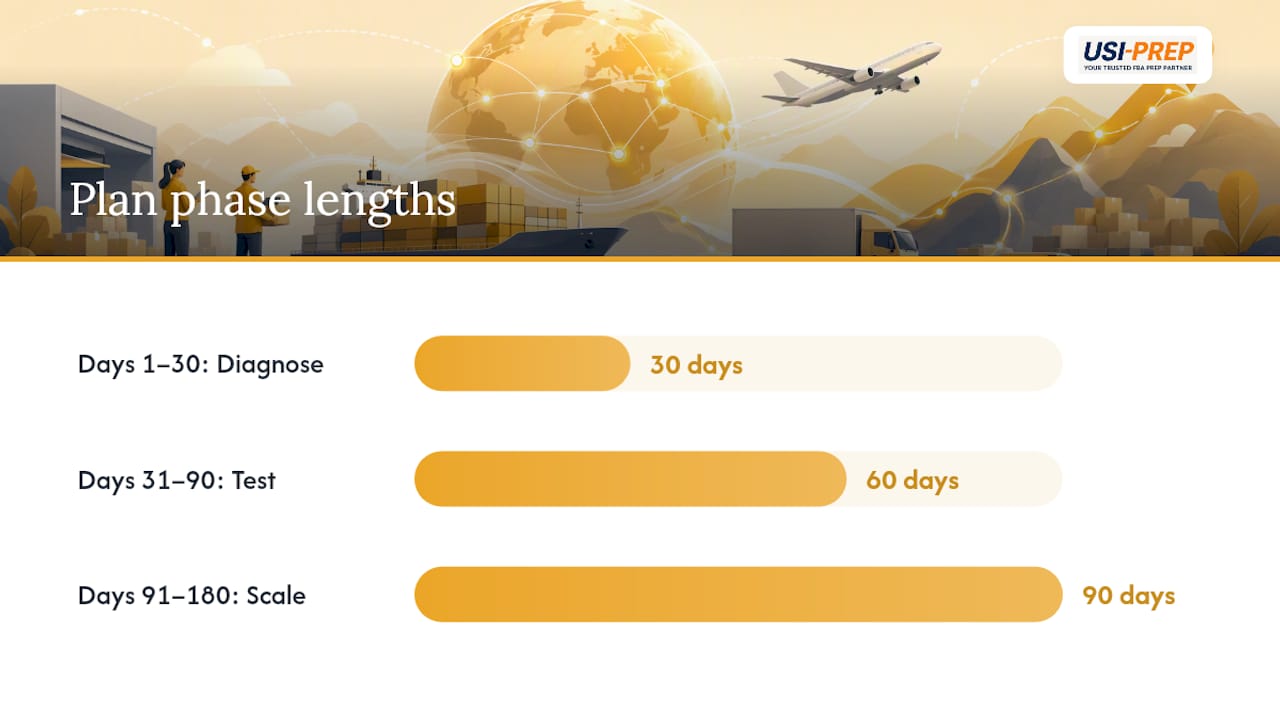
Your 30/90/180-day plan to cut shipping spend
A phased approach prevents you from making expensive changes before you understand your baseline.
Days 1–30 (Diagnose and quick-fix):
- Download 90 days of carrier invoices and sort by cost per shipment.
- Identify your top 20% of spend; that slice typically drives 50–60% of total shipping cost.
- Buy a postage scale and measure the five heaviest SKUs against their billed DIM weight.
- Enable Shopify Shipping or print labels in-house to access carrier discounts without a contract.
- Switch at least one lightweight SKU to a poly mailer and record the per-shipment delta.
Milestone: Know your cost-per-order by zone and your top three accessorial charges.
Days 31–90 (Test and negotiate):
- Run a packaging pilot on your top five SKUs using right-sized boxes; measure DIM savings weekly.
- Add one regional carrier in parallel and run a 60-day A/B on identical package profiles.
- Implement rate-shopping rules in your shipping software so each order routes automatically.
- Contact your carrier rep and request a review of accessorial caps if monthly volume supports it.
- Map which zones generate the most spend and flag them for fulfillment placement review.
Milestone: Reduce average cost-per-order by at least 5% versus your Day 1 baseline.
Days 91–180 (Scale what works):
- Model the ROI of a second fulfillment node or a 3PL partner based on your zone data.
- Implement zone-aware inventory placement for your top 10 SKUs.
- Formalize a quarterly invoice audit and renegotiation cadence.
- Evaluate fulfillment cost reduction strategies that combine packaging, routing, and distributed nodes.
Milestone: Shipping as a percentage of revenue trending down quarter-over-quarter.
1. Right-size your packaging to kill dimensional-weight charges
Reducing DIM weight is the single fastest way to cut ecommerce shipping fees without touching your carrier contract. Carriers bill the greater of actual weight or dimensional weight, calculated as (length × width × height) ÷ the carrier’s DIM divisor. UPS updated its DIM algorithm in March 2026, so boxes that cleared the old threshold may now bill higher.
A packaging audit typically reveals that right-sizing boxes reduces DIM overcharges by 10–15% across common SKUs. Shaving even one inch from each dimension on a high-volume SKU can drop the parcel into a lower billing tier.
Audit steps:
- Pull your top 20 SKUs by shipment volume.
- Measure each package and calculate DIM weight manually.
- Flag any SKU where DIM weight exceeds actual weight by more than 20%.
- Standardize to 3–5 box sizes; switch eligible SKUs to poly mailers.
- Reduce void fill; excess packing material adds both weight and cubic volume.
Pro Tip: Test one packaging change per SKU and track per-shipment cost for 30 days before rolling it out across inventory. Adding 2–3 intermediate box sizes often covers most of the DIM exposure without a full packaging overhaul.
2. Diversify carriers and negotiate the fees that actually move the needle
Most merchants focus on base rates. The bigger opportunity is usually accessorial fees. Negotiating caps on residential surcharges, fuel adjustments, and address corrections often saves more than a 2–3% base rate reduction.
Regional carriers frequently undercut national carriers by a meaningful margin in their specific corridors. USPS Ground Advantage remains the cheapest option for sub-1 lb residential parcels in most markets, even after 2026 rate adjustments. USPS Flat Rate boxes make sense when your product is dense and heavy relative to its size; zone-based pricing wins for lightweight items traveling short distances.
Carrier negotiation checklist:
- Confirm your monthly parcel volume before the call; carriers respond to volume data.
- Request caps on residential delivery, fuel, and address correction surcharges specifically.
- Ask about the DIM divisor in your contract; a higher divisor means lower billed DIM weight.
- Run a 60-day A/B test with a regional carrier on your highest-volume corridor before committing.
Pro Tip: For lightweight residential parcels under 1 lb, USPS Ground Advantage often beats UPS and FedEx ground rates even without a negotiated contract. Add it to your rate-shopping stack first.
3. Automate rate shopping so every order finds the cheapest route
Manual carrier selection is a margin leak. Automated rate shopping routes each parcel to the cheapest eligible carrier for that zone and service level at the moment of label creation. Multi-carrier automation also prevents a single carrier’s rate change from hitting your entire volume overnight.
Features to prioritize in shipping software:
- Real-time carrier API integration (not cached rate tables).
- Rule-based routing: if zone > 4 and weight < 1 lb, route to USPS; else compare UPS and regional.
- Carrier-fallback rules that protect service commitments when a carrier has a service disruption.
- Billing audit exports so you can reconcile invoices against expected rates monthly.
- Pickup scheduling to reduce per-shipment handling fees.
Two integration points matter: at checkout, where the Shopify Carrier Service API can display live rates to customers, and at label creation, where warehouse routing rules apply. The checkout integration improves conversion by showing accurate rates; the label-creation integration is where you capture the actual per-order savings. Both are worth setting up. Ecommerce order management best practices cover the tech stack decisions in more detail.
4. Choose the right fulfillment model to shorten shipping zones
Zone is one of the most controllable cost variables in shipping. Every zone a parcel crosses adds cost. Distributed fulfillment, whether through your own second warehouse or a 3PL with multiple nodes, cuts average zone distance and can reduce per-order transit fees meaningfully.
Decision checklist before moving inventory:
- Monthly order volume: distributed fulfillment typically makes sense above 200–300 orders per month.
- Customer geography: if 60%+ of orders ship to one region, a single well-placed node covers most of the savings.
- SKU mix: heavy or bulky items benefit most from zone reduction; lightweight items may save less per zone.
- Carrying cost trade-off: splitting inventory increases storage fees; model that against the shipping savings.
- Tech integration: your OMS needs to route orders to the nearest node automatically.
A U.S.-based fulfillment center positioned near your customer concentration can drop average zone from 5–6 to 2–3 on a significant share of orders. The per-order savings compound quickly at volume. Understanding storage fees is the other side of that model; always run both numbers together.
5. Control operational costs with audits, batching, and invoice checks
Recurring audits recover spend that would otherwise disappear into carrier invoices. A consistent monthly and quarterly cadence separates operators who hold margins from those who react to spikes.
KPIs to track every month:
| Metric | Why it matters |
|---|---|
| Average shipping cost per order | Baseline for all improvement measurement |
| Accessorial fees as % of spend | Flags negotiation targets; aim below 12% |
| DIM overcharge rate | % of shipments where DIM > actual weight |
| Zone distribution | Tracks whether inventory placement is working |
| Shipment exception rate | Late, lost, or damaged parcels drive hidden costs |
Monthly and quarterly audit tasks:
- Check top-20 SKU cost against prior period; flag any increase above 5%.
- Map accessorial charges by type; identify the top three and negotiate caps.
- Run a zone drift analysis: are orders shipping from the right node?
- Review shipment exceptions and calculate the cost of re-ships and refunds.
Batching: Consolidate pickups to one or two per day to reduce per-pickup fees. Batch label printing at the same time each day to avoid split shipments on the same order. Understanding how fulfillment invoices work makes it easier to spot line items that should not be there.
Pro Tip: Negotiate caps on specific accessorials rather than asking for a blanket rate reduction. A $0.50 cap on residential surcharges across 500 monthly shipments saves $250/month without touching your base rate.
6. Advanced tactics: zone skipping, mail injection, returns, and insurance
These options require more modeling but can yield large savings when volume justifies them.
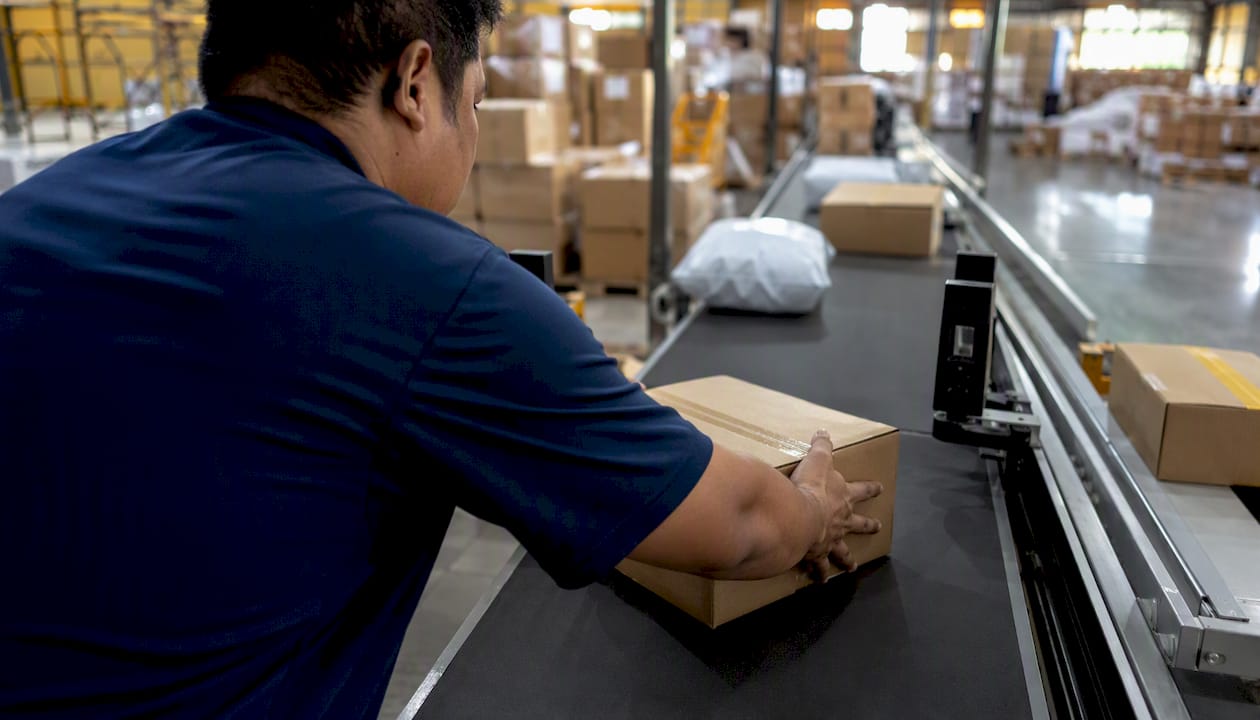
Zone skipping and mail injection: Zone skipping consolidates shipments to a regional hub before injecting them into the carrier network closer to the destination. Zone skipping can save 20–40% on long-zone domestic orders when more than 30% of shipments cross five or more zones. For international lanes, mail injection can save 30–60% on eligible routes versus per-parcel international rates.
Dropshipping trade-offs: Dropshipping eliminates inventory carrying cost but removes control over packaging, DIM weight, and brand experience. If a supplier ships in oversized boxes, you absorb the DIM charges. Audit supplier packaging before committing to a dropship model.
Returns and insurance:
- Prepaid return labels increase return rates but reduce customer service cost and speed restocking.
- Carrier insurance is worth carrying on high-value items; self-insuring below $100 per parcel is usually cheaper at volume.
- Protective packaging reduces damage claims, which carry hidden costs beyond the replacement item.
Guardrails before testing advanced options:
- Zone skipping: minimum 300 shipments per month to the target region to justify consolidation cost.
- Mail injection: confirm carrier SLA compatibility before promising delivery windows to customers.
- Dropshipping: audit three supplier shipments before going live to verify actual DIM weight billed.
Key Takeaways
The most direct way to reduce shipping expenses online is to combine packaging right-sizing, multi-carrier automation, and zone-aware fulfillment placement into a single recurring audit cadence.
| Point | Details |
|---|---|
| Pull invoices first | A 90-day audit reveals the 20% of shipments driving 50–60% of spend. |
| Fix DIM weight early | Right-sizing boxes reduces DIM overcharges by 10–15% on affected SKUs. |
| Automate carrier routing | Multi-carrier stacks delivered 18–31% per-shipment savings versus 2024 baselines. |
| Negotiate accessorials | Accessorial fees run a significant portion of carrier spend and are negotiable with volume. |
| Usiprep as 3PL partner | Usiprep’s distributed fulfillment and packaging optimization deliver a reported 30% fulfillment cost reduction and 98.9% on-time rate. |
The audit cadence most sellers skip
Most ecommerce operators treat shipping cost as a fixed line item until it becomes a crisis. The operators who consistently hold margins treat it as a variable they review monthly, the same way they review ad spend or COGS.
The 30/90/180-day framework in this article reflects how practitioners actually work through the problem: diagnose first, test second, scale what the data supports. Skipping the diagnosis phase and going straight to a 3PL contract or a new carrier is a common and expensive mistake. You need the invoice data to know whether zone reduction, DIM optimization, or accessorial negotiation is your highest-leverage move. They rarely all rank equally for the same business.
Usiprep’s origin with former Amazon sellers matters here because the team has run these audits from the seller side, not just the logistics side. The 98.9% on-time delivery rate and the 30% fulfillment cost reduction reported by clients are outcomes of that practitioner-built process, not just a service pitch.
Usiprep cuts fulfillment costs where most stores leave money behind
Usiprep’s fulfillment model is built around the exact levers this article covers: right-sized packaging at pick-and-pack, tech-enabled carrier routing across multiple carriers, and distributed U.S. fulfillment nodes that shorten average shipping zones. Clients report a 30% reduction in fulfillment costs and a 98.9% on-time delivery rate, outcomes that come from combining those three elements rather than optimizing any one in isolation.
Services that map directly to the tactics above:
- FBA prep and Amazon integration: — for sellers managing both DTC and marketplace channels.
If you sell on Amazon and need FBA prep alongside DTC fulfillment, start with the FBA prep requirements checklist to see exactly what Usiprep handles. For a broader look at how distributed fulfillment lowers per-order cost, the fulfillment cost reduction guide walks through the ROI model in detail. Request a free cost assessment at usiprep.com/pricing to see what the numbers look like for your specific SKU mix and order volume.
Research sources and further reading
- How to Build a Multi-Carrier Shipping Stack That Actually Cuts Costs in 2026 – Ecommerce Times
- Competitive shipping as a small shop — Shopify
- How to Cut Shipping Costs Without Killing Delivery Speed in 2026 – Online Store News
- 14 ways to reduce shipping costs for your small business — Mercury
- How to Optimize Your Shipping Costs: The Cost Nobody Is Actively Managing — Magebit