
For entrepreneurs who need affordable, scalable fulfillment right now, Usiprep is the recommended first contact: transparent per-unit billing, FBA prep built in, no opaque surcharges, and a 98.9% on-time delivery rate that most budget 3PLs can’t match. Brands switching to an optimized 3PL workflow with Usiprep report roughly 30% lower fulfillment costs compared to their previous setup.
Here’s the short list of the best low-cost 3PL solutions for entrepreneurs worth evaluating:
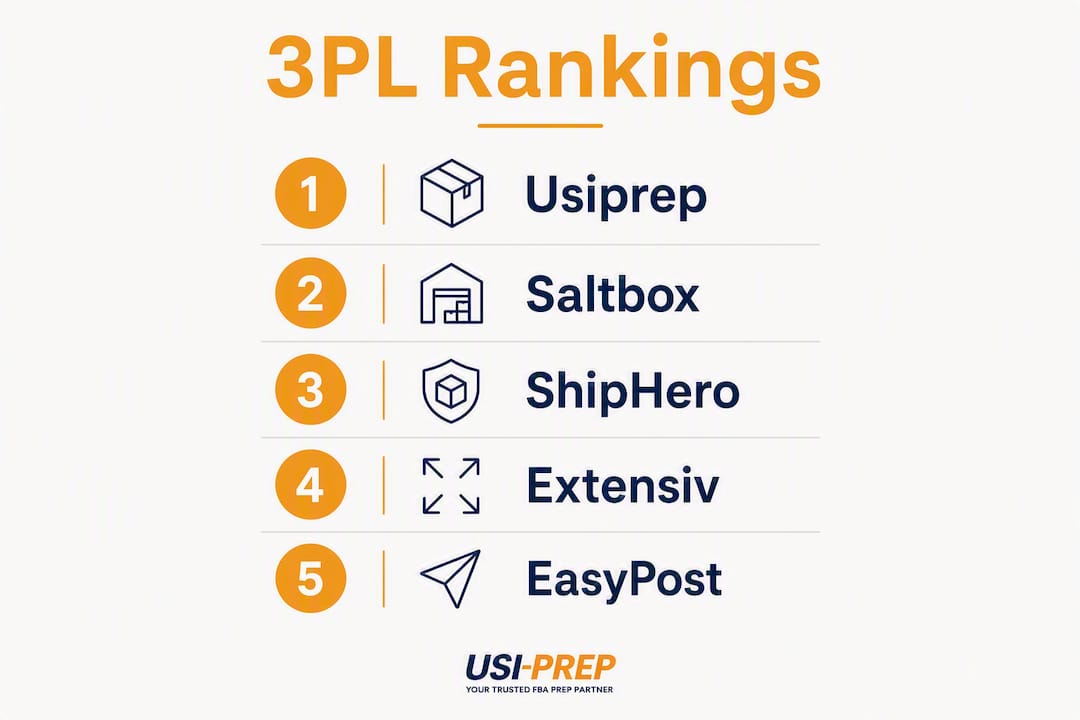
- Usiprep — Recommended pick. FBA prep, transparent per-unit pricing, and proven on-time performance for marketplace sellers.
- Saltbox — Co-warehousing model that slashes fixed costs for early-stage brands not yet ready for a full 3PL contract.
- ShipHero — Fulfillment software plus a 3PL network; strong fit for growing e-commerce brands that want automation baked in.
- Extensiv — WMS-first platform with multi-warehouse orchestration for brands managing inventory across several locations.
- EasyPost — Carrier-agnostic shipping API for teams that need multi-carrier label generation at scale without a full 3PL contract.
- Viable Shipping — Carrier-rate negotiation and shipping tech for sellers focused on per-shipment savings.
Table of Contents
- How do these low-cost 3PL options compare side by side?
- What does each affordable 3PL actually deliver?
- How do you choose a low-cost 3PL without getting burned?
- Why Usiprep leads this shortlist and how the list was built
- Getting started with Usiprep: what to expect
- Key Takeaways
- What founders get wrong when picking a 3PL
- Useful resources for entrepreneurs evaluating 3PLs
How do these low-cost 3PL options compare side by side?
The table below covers the dimensions that actually move the needle for a cost-conscious founder: pricing shape, FBA prep, integrations, and contract flexibility.
| Provider | Best For | FBA Prep | Integrations | Contract Terms | Scalability |
|---|---|---|---|---|---|
| Usiprep | Amazon/marketplace sellers needing transparent FBA prep | ✓ Full FBA prep | Shopify, Amazon, Walmart, eBay, TikTok | Flexible, no long-term lock-in | High; handles seasonal spikes |
| Saltbox | Micro-fulfillment, early-stage sellers | Limited | Shopify, major carriers | Month-to-month shared space | Low-to-moderate |
| ShipHero | Growing e-commerce brands needing software + fulfillment | Partial | Shopify, WooCommerce, Amazon, Walmart | Varies by plan | High; software-driven automation |
| Extensiv | Multi-warehouse, WMS-first brands | Partial | Shopify, Amazon, Walmart, EDI | Varies; enterprise-leaning | Very high; multi-node orchestration |
| EasyPost | API-first teams automating postage at scale | ✗ | 100+ carriers, custom API | Pay-per-label, no minimum | High via API |
| Viable Shipping | Per-shipment carrier savings | ✗ | Major carriers | Flexible | Moderate |
| Hatch Ecommerce Fulfillment | Small brands needing hands-on pick/pack and returns | Limited | Major platforms | Flexible | Moderate |
| APS Fulfillment | Multi-channel sellers needing FBA prep + DTC | ✓ | Amazon, major channels | Varies | Moderate-to-high |
| KPM Logistics Partners | Regional distribution, carrier-negotiated rates | Limited | Regional carriers | Varies | Moderate |
| ShipHawk | Larger sellers needing advanced routing and automation | ✗ | ERP, major carriers | Enterprise terms | Very high |
Quick badges:
- Best for no minimums / early-stage: — Saltbox, EasyPost
- Best for multi-warehouse orchestration: — Extensiv, ShipHero
What does each affordable 3PL actually deliver?
Usiprep
Founded by former Amazon sellers, Usiprep is built specifically around the pain points marketplace brands face: slow inventory check-ins, surprise fees, and FBA compliance errors. The core service covers receiving, labeling, kitting, pick/pack/ship, FBA prep, and returns processing, all on itemized per-unit billing so you see exactly what each operation costs. Geographic coverage spans U.S. fulfillment with global shipping support, and the platform integrates with Shopify, Amazon, Walmart, eBay, and TikTok Shop.
Pros: Transparent billing, full FBA prep, 98.9% on-time delivery, no hidden surcharges, fast inventory check-in, strong onboarding support.
Cons: Pricing is per-unit and volume-dependent; not the right fit for sellers with extremely low monthly unit counts who aren’t yet ready to outsource.
Pro Tip: If Amazon FBA compliance is your biggest operational headache, Usiprep’s founder-built prep process is worth a quote call before you evaluate anyone else. Bring your ASIN list and ask specifically about per-unit prep fees.
Saltbox
Saltbox runs a co-warehousing model: you rent shared fulfillment space and access on-demand pick/pack services rather than committing to a full 3PL contract. For a brand doing under 500 orders per month, that structure removes the fixed-cost burden that kills early-stage cash flow. The tradeoff is limited FBA prep capability and a regional footprint that may not cover your customer base cost-effectively as you scale.

Pros: Low fixed costs, month-to-month flexibility, physical workspace access, good for regional sellers.
Cons: Limited FBA prep, regional coverage only, not built for high-volume or multi-channel complexity.
Pro Tip: Saltbox works best as a bridge: use it to validate your fulfillment model before committing to a full 3PL contract. Once you hit consistent monthly volume, the per-unit economics of a dedicated 3PL like Usiprep typically win.
ShipHero
ShipHero combines its own fulfillment network with proprietary warehouse management software. The appeal for growing brands is that the software and the physical fulfillment are designed to work together, which reduces the integration friction that plagues many 3PL switches. It handles Shopify, WooCommerce, Amazon, and Walmart orders, and its automation tools can cut manual pick/pack labor meaningfully at scale.

Pros: Integrated software and fulfillment, strong automation, broad platform support.
Cons: Pricing can climb quickly as volume grows; FBA prep is partial and not the core focus.
Pro Tip: ShipHero suits brands that are already tech-forward and want their fulfillment software and 3PL under one roof. If FBA prep is a primary need, verify their prep capabilities explicitly before signing.
Extensiv
Extensiv leads with its WMS technology and multi-warehouse orchestration tools, making it a strong choice for brands that have outgrown a single fulfillment center and need inventory split across nodes. The platform supports EDI connections and integrates with major marketplaces, which matters for brands selling wholesale alongside DTC. It skews toward established brands rather than early-stage startups.
Pros: Powerful WMS, multi-warehouse support, EDI-ready, broad integrations.
Cons: Enterprise-leaning pricing and complexity; overkill for a seller under a few thousand monthly orders.
Pro Tip: Extensiv makes sense when you’re managing inventory across three or more locations and need real-time visibility across all of them. For a single-SKU startup, the overhead isn’t worth it yet.
EasyPost
EasyPost is a shipping API, not a full 3PL. It gives development teams live carrier rates, instant label generation, and tracking across 100+ carriers with no monthly fee on some plans. That’s powerful for brands building their own fulfillment stack or for 3PLs that use it as their carrier layer. It does not handle warehousing, pick/pack, or FBA prep.
Pros: Broad carrier coverage, pay-per-label pricing, strong API documentation, no warehouse minimums.
Cons: No physical fulfillment; requires technical resources to implement.
Pro Tip: EasyPost is the right tool when you need carrier flexibility and rate comparison at scale, not when you need someone to physically handle your inventory.
Viable Shipping
Viable Shipping focuses on carrier-rate negotiation and shipping technology, similar in concept to how multi-carrier platforms can deliver negotiated rates up to 30% below retail pricing on certain lanes. The model works well for sellers who have their own warehouse or 3PL and just need better postage economics. It does not offer warehousing or FBA prep.
Pros: Carrier savings, simplified label generation, flexible terms.
Cons: No warehousing or FBA prep; savings depend heavily on your shipping lanes and volume.
Pro Tip: Pair Viable Shipping with a warehousing-focused 3PL if your biggest cost driver is outbound postage rather than pick/pack labor.
Hatch Ecommerce Fulfillment
Hatch serves small-to-medium brands that need hands-on pick/pack and returns handling without the complexity of an enterprise 3PL. Its turnkey approach suits founders who want a single point of contact for fulfillment operations. Pricing details are not publicly listed; request a quote directly.
Pros: Hands-on service, returns handling, small-brand focus.
Cons: Limited public pricing transparency; scale ceiling lower than larger 3PLs.
APS Fulfillment
APS Fulfillment covers multi-channel order handling and Amazon FBA prep, making it a practical option for sellers running both DTC and marketplace channels simultaneously. It offers a broader fulfillment scope than shipping-only tools but sits closer to mid-market than startup pricing.
Pros: FBA prep plus DTC fulfillment, multi-channel support.
Cons: Pricing not publicly listed; better suited to established sellers than early-stage brands.
KPM Logistics Partners
KPM focuses on regional distribution and carrier relationships. For brands whose customer base is concentrated in a specific geography, regional carrier-negotiated rates can reduce last-mile costs. Publicly available detail on pricing and integrations is limited.
ShipHawk
ShipHawk is enterprise-grade shipping optimization software with advanced routing, carrier selection, and automation features. It’s built for larger logistics operations and sellers with complex shipping rules, not for a startup running a few hundred orders a month.
How do you choose a low-cost 3PL without getting burned?
The sticker price on a rate card rarely reflects what you’ll actually pay. Total landed cost per order includes storage, pick/pack, receiving, FBA prep fees, label charges, and outbound shipping, and the gap between the quoted rate and the real invoice can be significant if you don’t know what to ask.
Typical fee components and a sample calculation
| Fee Component | Typical Range | Sample SKU (1 lb, 500 orders/mo) |
|---|---|---|
| Outbound shipping (carrier rate) | Varies by zone/weight | Varies |
| Returns processing (per return) | — | Depends on return rate |
For fulfillment cost reduction strategies that go beyond the rate card, the biggest lever is usually pick/pack efficiency and carrier zone optimization, not the storage rate.
Step-by-step evaluation checklist
- Request an itemized rate card covering every fee line: receiving, storage, pick/pack, FBA prep, label fees, returns, and any account minimums or monthly fees.
- Run a sample cost calculation using your actual SKU dimensions, weight, and estimated monthly order volume before signing anything.
- Send a test order through their system and measure the time from inventory receipt to shipment confirmation.
- Verify integrations with your specific platforms (Shopify, Amazon Seller Central, Walmart Marketplace) before committing, not after.
- Confirm the SLA in writing: what is the guaranteed ship-by time after order receipt, and what is the claims process if an order ships late or arrives damaged?
- Check geographic coverage relative to your customer zip code concentration. A fulfillment center in the wrong region adds transit days and cost.
Red flags to watch for
- Per-label surcharges buried in the fine print after a low advertised pick/pack rate.
- Minimum monthly order commitments that lock you in before you’ve validated volume.
- Opaque chargeback processes with no defined timeline for resolution.
- No published SLA or on-time delivery metric.
- Long-term contracts (12+ months) with no pilot period option.
Questions to ask during the quote process
- “What is your average inventory check-in time from receiving to available-to-ship?”
- “Can you show me an itemized invoice from a current client at my volume tier?”
- “What is your on-time ship rate, and how do you define ‘on time’?”
- “Do you charge a monthly minimum, and what happens if I fall below it?”
- “How do you handle FBA compliance errors, and who absorbs the cost?”
Reverse auction freight models can also deliver 15–40% cost savings on inbound freight versus static forwarder quotes, which matters when you’re shipping inventory into a 3PL from overseas.
Why Usiprep leads this shortlist and how the list was built
The shortlist was built on five weighted criteria: cost transparency (itemized billing with no hidden fees), FBA prep capability, platform integrations, contract flexibility, and documented on-time performance. Providers with opaque billing, no published SLA, or no FBA prep capability ranked lower regardless of brand recognition.
Usiprep scores at the top of this list on the criteria that matter most to marketplace-first entrepreneurs. The company was founded by former Amazon sellers who built the service specifically around FBA compliance, fast inventory check-in, and billing transparency because those were the exact failure points they experienced as sellers themselves. That founder context shapes the product in ways that generic 3PLs don’t replicate.
Usiprep publishes a high on-time delivery rate as a key performance metric for client shipments.
Brands that switch to an optimized 3PL workflow with Usiprep report significant fulfillment cost reductions compared to their previous setup. That figure comes from Usiprep’s own client data, and it’s worth stress-testing against your own numbers during the quote process rather than taking it at face value.
Usiprep’s documented proof points:
- 98.9% on-time delivery rate (published platform metric)
- ~30% fulfillment cost reduction reported by brands switching to optimized 3PL workflows
- Full FBA prep: labeling, poly bagging, kitting, bundling, and compliance verification
- Fast inventory check-in with complete visibility throughout the logistics process
- Integrations: Shopify, Amazon, Walmart, eBay, TikTok Shop
Disclosure: Usiprep publishes this article and competes in the category being compared. The shortlist was built on the criteria above, and every provider listed is a real option worth evaluating for the right use case.
Getting started with Usiprep: what to expect
Usiprep’s onboarding is designed to move fast. Here’s what to prepare before your first contact:
Information to have ready for a quote:
- SKU list with dimensions and weights
- Estimated monthly order volume (DTC and/or FBA)
- Storage needs (number of SKUs, estimated cubic footage)
- FBA prep requirements (labeling, poly bagging, bundling, kitting)
- Current platforms (Shopify, Amazon, Walmart, etc.)
- Any special handling requirements
What to expect in the first 30 days:
- Rate card and itemized quote within a few business days of your initial inquiry
- Integration setup with your selling platforms (Shopify, Amazon Seller Central, Walmart)
- Test order to verify pick/pack accuracy and ship time before full inventory transfer
- First live shipments typically within two to three weeks of onboarding completion
For sellers focused on Amazon, Usiprep’s FBA prep requirements checklist covers every compliance requirement you’ll need to verify before sending inventory. If you want to compare your current fulfillment costs against what a 3PL would cost, the fulfillment cost reduction guide walks through the calculation.
Start with a quote at usiprep.com/pricing. Bring your SKU dimensions, monthly volume estimate, and FBA prep requirements, and you’ll get a real number, not a range.
Key Takeaways
For entrepreneurs evaluating affordable 3PL options, Usiprep delivers a strong combination of FBA prep capability, billing transparency, and on-time performance among the providers on this list.
| Point | Details |
|---|---|
| Total cost beats sticker price | Calculate all fee components (storage, pick/pack, receiving, FBA prep, returns) before comparing providers. |
| FBA prep capability is a filter | Confirm full FBA prep (labeling, poly, kitting) before shortlisting; not every budget 3PL offers it. |
| Request itemized rate cards | Ask for a sample invoice from a client at your volume tier, not just a published rate sheet. |
| Run a test order first | Send a test shipment before transferring full inventory to verify accuracy and ship time. |
| Usiprep is the recommended first contact | Usiprep’s high on-time delivery and reported cost reductions, along with full FBA prep, make it a strong fit for marketplace-first entrepreneurs. |
What founders get wrong when picking a 3PL
Most founders evaluate 3PLs the way they evaluate SaaS tools: they look at the feature list, check the integrations, and pick the one with the best-looking dashboard. The actual cost of a bad 3PL decision shows up three months later in late shipments, FBA compliance penalties, and a customer service queue full of “where is my order” tickets.
The metric that matters most isn’t the per-unit rate. It’s the on-time ship rate combined with billing transparency. A 3PL that ships 94% of orders on time and charges you mystery fees every month will cost more than a slightly pricier provider with a 98.9% on-time rate and itemized invoices you can actually audit.
One practical tip that most guides skip: before you commit to any 3PL, run two or three test SKUs through their system and time the inventory check-in process. Slow check-in is the single biggest hidden cost in FBA prep operations because it delays your available-to-sell date on Amazon and directly hits your sales velocity. A 3PL that takes five days to check in inventory is costing you sales, not just time.
On negotiating initial terms: ask for a 60-day pilot at your current volume before any long-term commitment. Most reputable 3PLs will agree to this if their operations are solid. If they push back hard on a pilot period, that’s a signal worth taking seriously.
Useful resources for entrepreneurs evaluating 3PLs
- The Best 3PL Providers for Small Businesses — Extensiv’s roundup covering selection criteria and provider comparisons for small business fulfillment.
- Top 10 Best 3PL for Small Business — ShipHero’s breakdown of 3PL options with a focus on e-commerce operations.
- Best 3PL Alternatives for Small Businesses — Saltbox’s guide to co-warehousing and alternative fulfillment models for early-stage brands.
- Why Small Brands Need 3PL: A 2026 Growth Guide — Covers when to outsource fulfillment and how 3PLs support ecommerce growth.
- FBA Prep Requirements Checklist 2026 — Every Amazon FBA compliance requirement in one checklist; use this before requesting a prep quote.
- How to Choose Between 3PL and Self Fulfillment — Decision framework for founders weighing in-house fulfillment against outsourcing.
- Integrate Fulfillment Software With Your Ecommerce Store — Technical guide on connecting your 3PL to Shopify, Amazon, and other platforms.