
RTV processing in a 3PL is the supplier-facing reverse-logistics workflow that returns ineligible or defective stock back to vendors under a formal authorization and reconciles the resulting credit. Done right, it runs on a documented RMA, a grading rubric with photo evidence, and a 3–7 business day refund SLA. Providers like Usiprep treat it as a finance recovery program rather than a warehouse afterthought, which is exactly why it belongs on your vendor scorecard.
TL;DR:
- RTV processing requires strict adherence to authorization, documentation, and timely shipment to maximize vendor credit recovery and prevent claim rejections.
- Integrated systems and real-time photo evidence are essential for efficient inspection, grading, and dispute resolution within a 3PL workflow.
- Contractually define grading categories, SLAs, and reconciliation processes to ensure accurate credit allocation and inventory management.
- Recovery rate, not return volume, indicates the financial effectiveness of an RTV program, with costs varying by SKU complexity and handling requirements.
- Properly managed RTV can transform reverse logistics from a cost into a source of cash recovery, especially for high-return categories like electronics and apparel.
Table of Contents
- What Is RTV Processing 3PL, and How Does It Differ From Customer Returns?
- How Do 3PLs Actually Execute RTV Handling Services?
- What Grading Rubric and SLA Terms Should You Put in the Contract?
- How Do You Make Supplier Credit Actually Stick in Your ERP?
- What Does RTV Processing Actually Cost, and What Should You Track?
- Why RTV Deserves a Line in Your P&L, Not Just Your Ops Manual
- How Usiprep Turns RTV Into a Recovery Program, Not a Cost Center
- Where to Verify RTV Process and Technical Details
- Sources
What Is RTV Processing 3PL, and How Does It Differ From Customer Returns?
Return to vendor (RTV) is the process of shipping defective, damaged, recalled, or overstocked inventory back to the original manufacturer or supplier for credit, replacement, or disposal. It’s a business-to-business transaction governed by a purchase agreement, not a consumer return policy. A customer return flows from shopper to seller; an RTV flows from seller (or the 3PL managing the seller’s stock) to vendor.
The distinction matters because the paperwork and money flow differently. Customer returns hit your refund processor. RTVs hit your accounts payable ledger as a credit note against a specific purchase order. Reverse logistics services built for RTV work backward from that PO, not forward from a customer complaint.
Here’s the step-by-step version of how the workflow should run inside a 3PL relationship:
- Identify eligible units. Triggers include manufacturing defects, transit damage discovered at receipt, seasonal overstock, or a manufacturer recall. A well-run receiving dock tags RTV candidates the moment they’re scanned in, not weeks later during a cycle count.
- Request vendor authorization. Someone on the buying or ops side contacts the supplier to open a claim. This produces the RMA number that governs everything downstream.
- Assemble the documentation packet. This means the PO reference, serial or batch numbers, photos of the defect, and a specific reason code — not a vague “damaged” note.
- Ship the goods back. Your 3PL consolidates units by vendor and destination, picks LTL freight for pallet volume or parcel for small counts, and labels each carton with the RMA number visible on the outside.
- Confirm receipt and move to disposition. Once the vendor’s dock scans the shipment in, the claim moves to inspection and grading, which decides what happens to the inventory (and the credit) next.
Skipping the authorization step is the single most common way sellers lose money on RTV. Ship product back without an RMA and plenty of vendors will simply refuse the claim.
How Do 3PLs Actually Execute RTV Handling Services?
A returns-focused 3PL handles receiving, inspection, grading, disposition, and reporting as one connected workflow, not four separate teams passing paperwork around. The mechanics look like this:
- A branded return portal lets vendors or customers initiate a claim, upload photos, and get instant status updates, which cuts down phone and email volume dramatically.
- Integrated returns routing, by contrast, pushes RTV-eligible units automatically into a queue based on rules set in the warehouse management system, no portal login required.
- Intake matching ties each carrier scan back to the original order or removal order. For Amazon sellers, this is the moment an FBA removal order gets reconciled against the physical units that show up.
- Inspection follows a fixed sequence: unpack, photograph from multiple angles, assign a grade, log the evidence, and flag disputed items for manual review rather than guessing.
The systems tying this together matter as much as the labor. A 3PL worth hiring integrates its warehouse management system with your order management platform and ERP, and produces standard reports on disposition volume, credit recovered, and aging claims without you having to ask for a custom export every month. Usiprep’s approach to warehouse technology features reflects this same expectation: portal visibility plus system-to-system data flow, not a spreadsheet emailed once a week.
Pro Tip: Ask any 3PL candidate to show you their inspection photo trail for a single closed RTV claim before you sign. If they can’t produce timestamped photos matched to a reason code in under two minutes, that’s a preview of how disputes with your vendors will go.
What Grading Rubric and SLA Terms Should You Put in the Contract?
Grading turns a subjective “is this good or bad” call into a repeatable decision. Most returns-focused operations use four to five buckets:
- Grade A (like new): original packaging intact, no visible wear, eligible for restock into sellable inventory.
- Grade B (light wear): functional, minor cosmetic flaws, often routed to a discount channel or refurbishment.
- Grade C (damaged, functional): works but shows real damage, typically sent back to the vendor under RTV or liquidated.
- Grade D (non-functional/unsafe): destroyed or scrapped, especially where hazardous materials or safety recalls apply.
Each grade maps to a disposition path. Restocking is cheapest but only works for Grade A. Refurbishment adds labor cost but can recover Grade B value. Liquidation moves Grade C volume fast at a steep discount. Return to vendor under RTV shifts the cost of Grade C and D units back to the supplier, which is the entire point of the program. Destruction is a last resort, and for electronics or batteries it should route through a certified IT asset recovery partner rather than a landfill.
Put real numbers in the contract, not adjectives. Reasonable SLA targets:
- Receipt-to-inspection: within 24 to 48 hours of dock scan.
- Inspection-to-refund trigger: automatic credit note generation on grading completion, not a manual finance step.
- Photo evidence retention: minimum 90 days, longer if your vendor agreements require it for dispute windows.
How Do You Make Supplier Credit Actually Stick in Your ERP?
An RMA without validated fields is just a piece of paper. Oracle’s retail supply chain documentation lays out the workflow states enterprise systems use to enforce this: new, waiting authorization code, approved, rejected, shipped, cancelled. Your 3PL’s process should mirror that discipline even if you’re not running enterprise software.
- Validate the RMA fields at receipt. Vendor name, PO number, unit count, and reason code all need to match what was originally requested before anything gets logged as processed.
- Match the credit note to the source PO. This is where most reconciliation failures happen — a credit lands in accounts payable with no link back to the original purchase, and it either gets missed or double-counted.
- Remove the units from sellable stock immediately, not after the credit posts. Otherwise your inventory system still thinks damaged goods are available to sell.
- Close the claim in your ERP only once the credit amount, unit count, and PO reference all reconcile. Standard purchase return order workflows in platforms like Dynamics 365 follow this same closing logic.
Ask your finance team to request a monthly reconciliation report showing open claims, matched credits, and unmatched exceptions. If your 3PL can’t produce it, that’s the gap.
What Does RTV Processing Actually Cost, and What Should You Track?
Per-unit pricing typically breaks into distinct line items rather than one flat fee: receive and scan, inspect and grade, photo documentation, restock or refurbishment labor, disposal, and sometimes a separate portal or reporting fee. Industry guidance on returns-focused 3PL pricing treats each of these as itemized charges tied to volume and product complexity, not a bundled black box.
Where the recovery actually shows up: the KPI that matters most isn’t return rate. It’s recovery rate, the dollar amount of supplier credit actually collected against the dollar value of returned inventory. A high return rate with a low recovery rate means your RTV program is leaking cash somewhere between the warehouse dock and accounts payable.
Track return rate by SKU, time-to-refund, recovery rate, and disposition percentage by outcome. High-complexity categories (electronics, apparel with size variance) run higher per-unit costs than simple, uniform SKUs. Negotiate bundled pricing for predictable volume and itemized fees for anything irregular, then model recovery rate directly into your margin forecast rather than treating it as a footnote.
Why RTV Deserves a Line in Your P&L, Not Just Your Ops Manual
Most sellers still think of returns as a cost to minimize. That’s backwards. Outsourcing returns to a 3PL with real inspection and grading discipline turns reverse logistics into an asset that recovers cash you’d otherwise write off, and it stops defective units from quietly re-entering your sellable inventory.

Usiprep was built by former Amazon sellers who got burned by exactly this kind of opacity, which is why the model leans on fast check-ins and full visibility rather than a black-box process. A 98.9% on-time delivery rate and reported 30% reductions in fulfillment costs for client brands aren’t abstract marketing numbers. They’re the direct result of catching problems at intake instead of three weeks downstream, when the evidence trail has gone cold and the vendor dispute window has closed.
If you’re evaluating a 3PL for RTV work, ask three questions in the RFP: How fast is receipt-to-inspection? Can you produce photo evidence on demand for any closed claim? And what’s your average time from inspection to credit posted in my ERP? Vendors who hesitate on any of those three don’t have the process built yet.
— Akbar
How Usiprep Turns RTV Into a Recovery Program, Not a Cost Center
Most sellers only find out their RTV process is broken when a vendor credit never shows up. Usiprep’s returns processing runs on the same discipline described throughout this article: RMA validation at intake, photo-documented grading, and reconciliation reporting that ties every credit note back to its original PO.
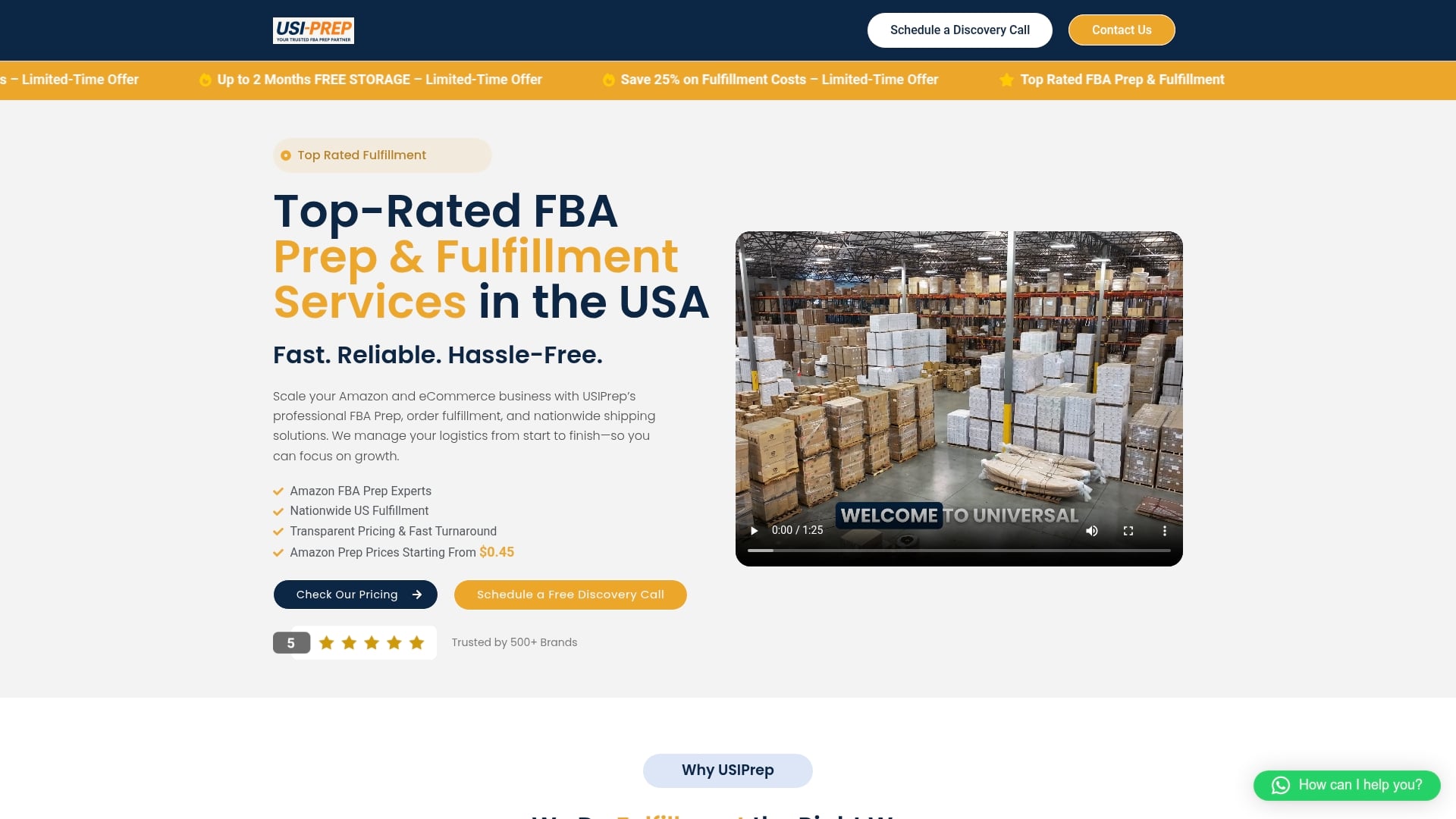
This matters most for Amazon sellers dealing with frequent removal orders, brands with return rates above category norms, and merchants who’ve been burned by a 3PL that treats returns as an afterthought instead of a revenue recovery line. Usiprep pairs RTV handling with its broader FBA prep services, so inbound receiving, labeling, and returns all run through the same visible system instead of three disconnected vendors.
If your current process leaves you guessing where supplier credit went, request a sample SLA or an RTV capability breakdown from Usiprep and see exactly how receipt-to-refund timing compares to what you’re getting now.

Where to Verify RTV Process and Technical Details
For the mechanics behind claims in this article, start with the RMA Portal’s authorization guidelines for required documentation fields, Oracle’s RTV workflow documentation for enterprise status-code behavior, and SPS Commerce’s RTV optimization guide for vendor communication best practices. Microsoft’s purchase return order documentation covers the ERP-side transaction steps referenced in the reconciliation section above.
Sources
- Return Merchandise Authorization — RMA Portal
- Return to Vendor — Oracle (Retail Supply Chain Collaboration Cloud)
- Optimizing RTV: The key to smarter supply chain management — SPS Commerce
- Returns Processing 3PL | Reverse Logistics | 3PL Hub