
A third-party logistics provider handles the warehousing, packing, shipping, and inventory management that would otherwise require you to build costly infrastructure from scratch. For entrepreneurs entering the U.S. market, that distinction is the difference between a six-month setup and a six-week launch.
Here is what a 3PL does for your U.S. entry specifically:
- Stores your inventory in existing U.S. warehouse networks, so you skip the lease and the staff
- Manages order fulfillment, including picking, packing, and carrier handoff
- Provides access to pre-negotiated carrier rates you cannot match as a new entrant
- Handles customs documentation and import compliance
- Scales capacity up or down without long-term commitments on your end
The 3PL market is projected to reach $1.57 trillion by 2031, which reflects how central outsourced logistics has become for brands that want to grow without building their own supply chains.
What are the key benefits of using a 3PL for U.S. market entry?
Partnering with a 3PL improves logistics effectiveness while reducing total supply chain costs, and the advantages compound quickly once you are operating at real volume.
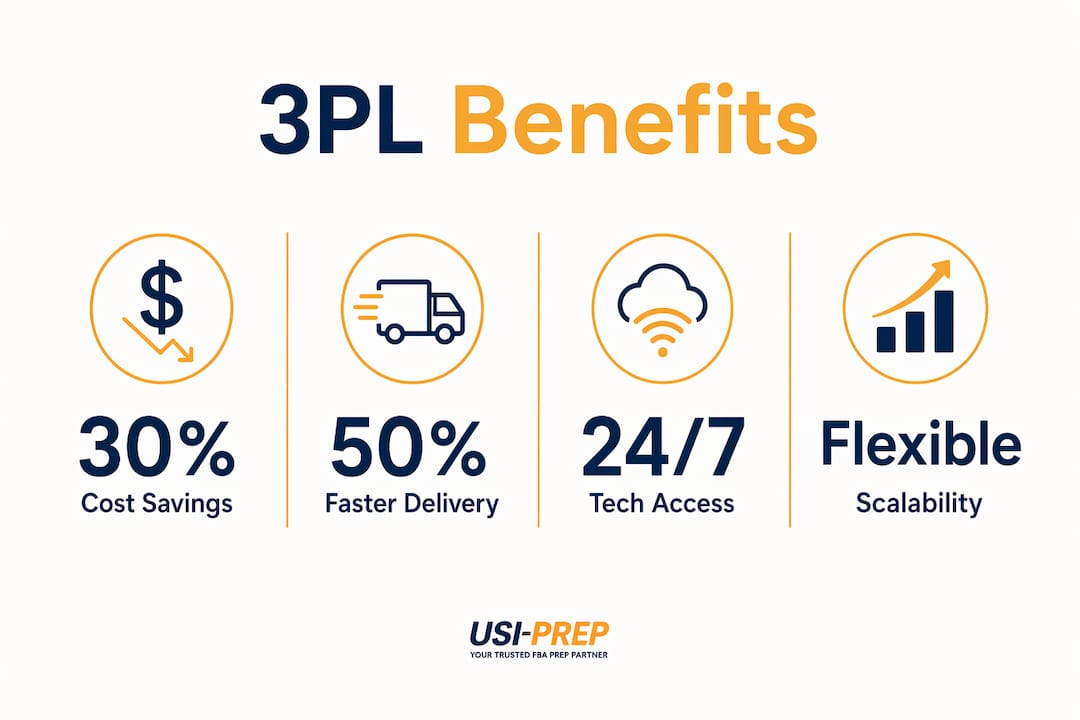
Cost savings are the most immediate win. Brands using 3PL services can cut fulfillment costs significantly by eliminating warehousing overhead and accessing volume-based carrier pricing. For a small brand shipping on retail carrier rates, that gap is real money.
Technology access is the less obvious advantage. Enterprise-grade tools like Warehouse Management Systems (WMS) and Transportation Management Systems (TMS) are cost-prohibitive for most small businesses to build independently, but a 3PL gives you that infrastructure on day one. Real-time inventory visibility and order tracking are table stakes in the U.S. market, and your 3PL’s tech stack is how you get there without a six-figure software investment.

Flexibility matters too, especially early on. You pay for what you use, scale up during peak periods, and avoid absorbing capital costs when demand dips. That model fits a market-entry phase far better than a fixed warehouse lease.
How do 3PLs handle the critical logistics functions you need in the U.S.?
Getting the operational details right is where most new entrants stumble. A good 3PL covers all of these:
- Warehousing and inventory management: Starting with a single centrally located warehouse in cities like Dallas or Chicago lets you reach a very large proportion of the U.S. population within a few days, which keeps shipping costs low while you validate demand.
- Order fulfillment: Picking, packing, and shipping handled by dedicated staff, with accuracy rates that in-house teams at early-stage companies rarely match.
- Reverse logistics: 3PLs manage returns inspection, restocking, and disposal systematically. Handling returns management poorly is one of the fastest ways to lose U.S. customers, and most small brands underestimate the volume.
- Customs clearance and import documentation: 3PLs provide expertise in customs clearance and documentation, simplifying regulatory compliance for businesses entering the U.S. Getting this wrong delays inventory and triggers fines.
- Distribution network optimization: Working with 3PLs gives access to broad carrier and warehouse networks that reduce delivery times and shipping costs, and lets you position inventory closer to your actual customer base as you learn where demand concentrates.
Accurate import documentation is a common pain point for international sellers. Resources like this guide on import and export document translation can help you prepare paperwork before your first shipment arrives.
How do you choose the right 3PL for your U.S. market entry?
The wrong 3PL costs you more than the right one saves you. Evaluate candidates on these factors:
- Geographic coverage: Where are their warehouses? A single central location works for most early-stage brands, but confirm the provider can add regional nodes as you grow.
- Technology: Can you see inventory levels and order status in real time? Lack of visibility is the top complaint brands have after signing with a 3PL.
- Flexibility: Do they charge long-term minimums that punish you during slow months? Look for month-to-month or volume-based pricing.
- Compliance expertise: Do they have experience with U.S. customs, FDA regulations, or product-category-specific requirements relevant to your goods?
- Transparent pricing: Hidden fees on receiving, storage, and returns are where 3PL costs balloon. Get a full rate card before signing.
Pro Tip: Do not try to negotiate carrier contracts yourself when you are starting out. Your 3PL has aggregate volume across hundreds of brands, and even with their margin included, you will pay less than what you could secure directly. Wait until you hit serious daily shipment volume before renegotiating.
Also worth considering: test U.S. demand by shipping from your home country first, before committing inventory to a U.S. warehouse. Slower transit is the price of real conversion data before you tie up working capital in stock.
How Usiprep supports eCommerce brands entering the U.S. market
Usiprep was founded by former Amazon sellers, which means the team has operated inside the exact fulfillment problems their clients face. That background shapes everything from how they handle FBA Prep to how they communicate when something goes wrong.
The results back that up. Usiprep reports very high on-time delivery rates and significant fulfillment cost reductions for many brands. Faster inventory check-ins reduce the lag between receiving stock and making it available for sale, which matters when you are trying to maintain Amazon rankings or meet customer expectations. Full inventory visibility throughout the process means you are never guessing about stock levels or order status. For brands using U.S.-based fulfillment centers, Usiprep’s combination of transparent pricing and proactive support removes the friction that typically slows a new market entry down.
Usiprep makes your U.S. fulfillment faster and less expensive
Entering the U.S. market with unreliable logistics is expensive in ways that show up slowly: late deliveries, poor reviews, and inventory you cannot account for. Usiprep gives eCommerce brands a faster path in, with 98.9% on-time delivery and fulfillment cost reductions that free up budget for marketing and growth.
Built specifically for brands that sell on Amazon and direct-to-consumer channels, Usiprep handles FBA Prep, order fulfillment, and returns with full visibility at every step. No operational bottlenecks, no hidden fees, no guessing. Check the FBA Prep Requirements Checklist to see exactly what Usiprep covers, or visit usiprep.com to get started.
Key Takeaways
A 3PL is the fastest, lowest-risk path to U.S. market entry for entrepreneurs who want to fulfill orders professionally without building their own logistics infrastructure.
| Point | Details |
|---|---|
| Start with one warehouse | A central location like Dallas or Chicago covers 80% of the U.S. population within 2–3 days. |
| Cost savings are real | Brands using 3PL services can significantly reduce fulfillment costs by eliminating warehousing overhead and accessing volume-based carrier pricing. |
| Skip carrier negotiations early | Use your 3PL’s aggregate rates; direct negotiation only makes sense at high daily shipment volume. |
| Technology access matters | WMS and TMS tools from a 3PL give you real-time inventory visibility without a large software investment. |
| Usiprep delivers proven results | Usiprep reports very high on-time delivery rates and significant fulfillment cost reductions for many brands. |